Dark spots, uneven tone, and stubborn discoloration are among the most common skin concerns people bring to dermatologists — and one vitamin comes up again and again as the answer: vitamin C.
Why Vitamin C Is the Go-To Vitamin for Skin Spots
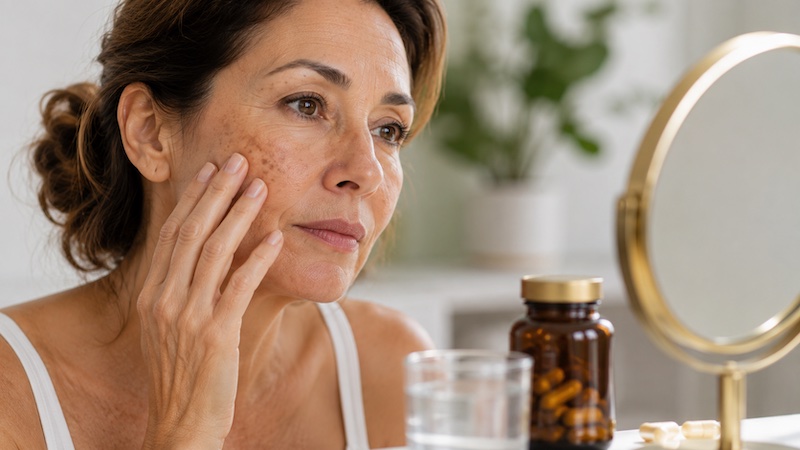
Skin spots — whether from sun exposure, acne marks, hormonal changes, or aging — are almost always caused by an overproduction of melanin, the pigment responsible for skin color. When skin is injured or exposed to UV light, melanocytes (the cells that produce melanin) go into overdrive, leaving behind dark patches once the skin heals.
Vitamin C interrupts that process at the source. It works by down-regulating tyrosinase, the enzyme directly responsible for melanin production, which is why dermatologists consider it one of the most evidence-backed ingredients for fading discoloration and preventing new spots from forming.
It’s also a potent antioxidant, meaning it helps neutralize the free radical damage from sun exposure that triggers pigmentation in the first place — while also supporting collagen production, which keeps skin looking firmer and more even overall.
Dermatologists who specialize in pigmentation routinely list vitamin C as a first-line recommendation, precisely because it tackles the problem from two angles: it brightens existing spots and helps prevent future ones, all while doubling as daily antioxidant protection against UV damage.
How to Use It
Vitamin C for skin spots can be taken in through two channels — topically and through diet — and dermatologists generally recommend combining both rather than relying on just one.
Topically, look for a serum with a concentration between 10% and 20%. This range is considered the sweet spot: strong enough to be effective, but generally gentle enough to avoid irritation. The most researched form is L-ascorbic acid, though other stabilized derivatives are available for sensitive skin. Vitamin C is a notoriously unstable ingredient — it degrades when exposed to light, air, and heat — so it should be stored in an opaque, airtight container in a cool, dark place. If a serum turns brown or takes on a reddish tint, that’s a sign it has oxidized and should be replaced.
Results aren’t instant. Most people begin to notice visible improvement after three to four weeks of consistent use, with more significant fading typically appearing around the two-month mark.
Through diet, vitamin C is abundant in citrus fruits, bell peppers, strawberries, kiwi, and leafy greens. Because heat breaks vitamin C down, these foods are most effective eaten raw or lightly cooked.
A Vitamin That Works Even Better in Combination
Vitamin C rarely works alone in a well-designed skincare routine. It’s frequently paired with:
- Vitamin E, another antioxidant that works synergistically with vitamin C, boosting its stability and effectiveness against oxidative damage.
- Niacinamide (vitamin B3), which helps prevent melanin packets from depositing into skin cells and is gentler for sensitive skin types.
- Retinol, which accelerates cell turnover and also inhibits tyrosinase, making it a common nighttime complement to a morning vitamin C routine.
Because some of these actives can be irritating when layered together, dermatologists often suggest alternating them — vitamin C in the morning, retinol or niacinamide at night — rather than applying everything at once.
The One Non-Negotiable Step
No vitamin C routine will meaningfully fade spots without daily sun protection. UV exposure is the single biggest trigger for melanin overproduction, so dermatologists are unanimous that a broad-spectrum SPF 30 or higher is essential — not optional — for anyone treating hyperpigmentation. Without it, new spots will keep forming as fast as old ones fade.
The Bottom Line
If you’re dealing with skin spots, vitamin C is the vitamin most consistently backed by dermatologists and clinical research for fading discoloration and preventing new spots from forming. It works best as part of a broader routine — paired with sun protection, and often with complementary ingredients like niacinamide or retinol — rather than as a standalone fix.
As with any active skincare ingredient, it’s worth talking to a dermatologist first, especially if you have sensitive skin or a specific type of pigmentation like melasma, which can require a more tailored approach.
References
- Byrdie / AOL — Yes, Vitamin C Can Help Reduce Dark Spots—Here’s the Derm-Approved Way to Make it Work For You
- SLMD Skincare (Dr. Sandra Lee, MD) — 7 Powerful Ingredients to Fade Dark Spots, According to Dermatologists
- Rose Ingleton MD — Products I Recommend For Hyperpigmentation as a Dermatologist
- Ducray — Vitamins that help prevent hyperpigmentation
- The INKEY List — Hyperpigmentation Treatment & Dark Spot Skincare
- Foundation Skincare — Best Supplements for Hyperpigmentation and Dark Spots